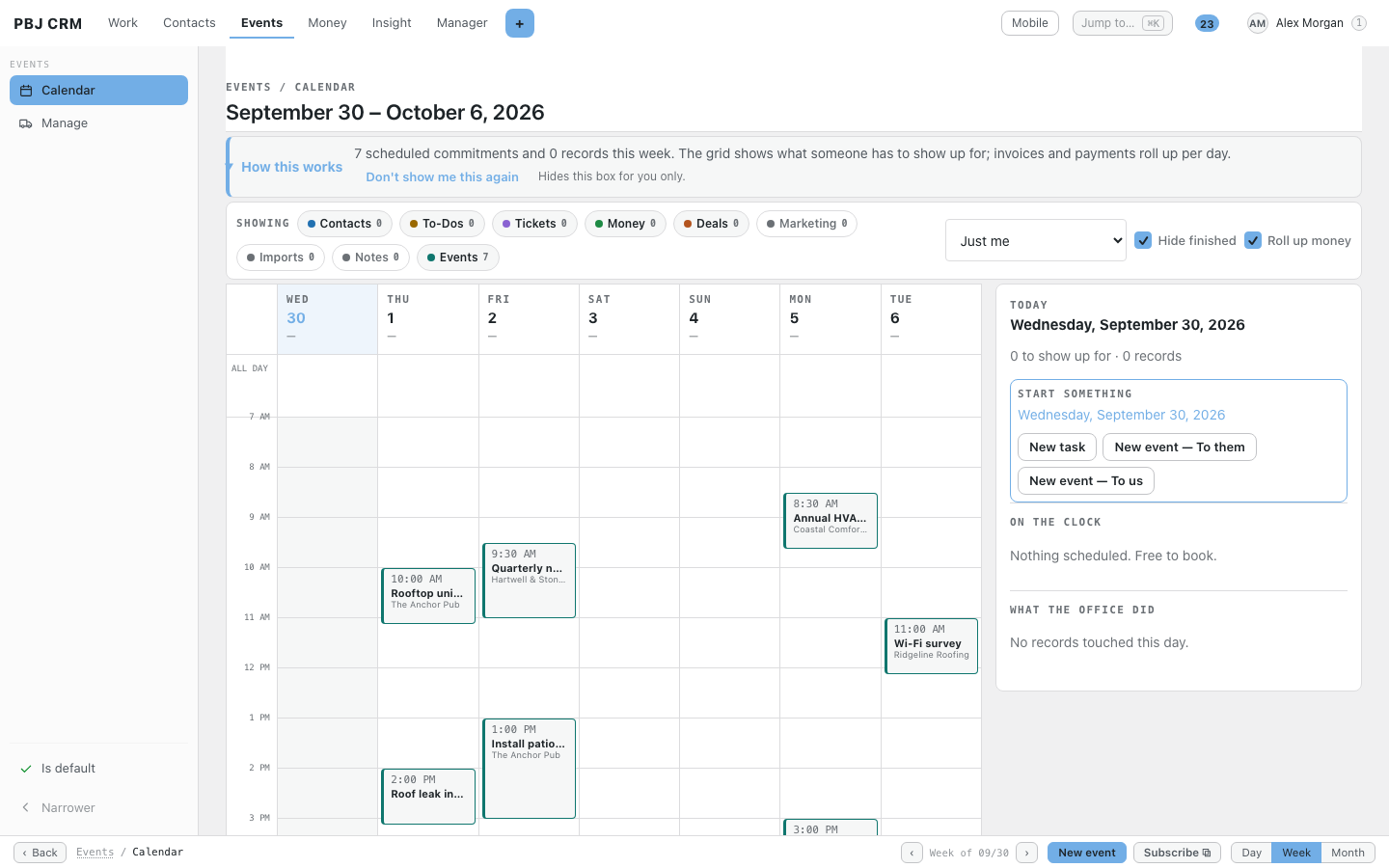
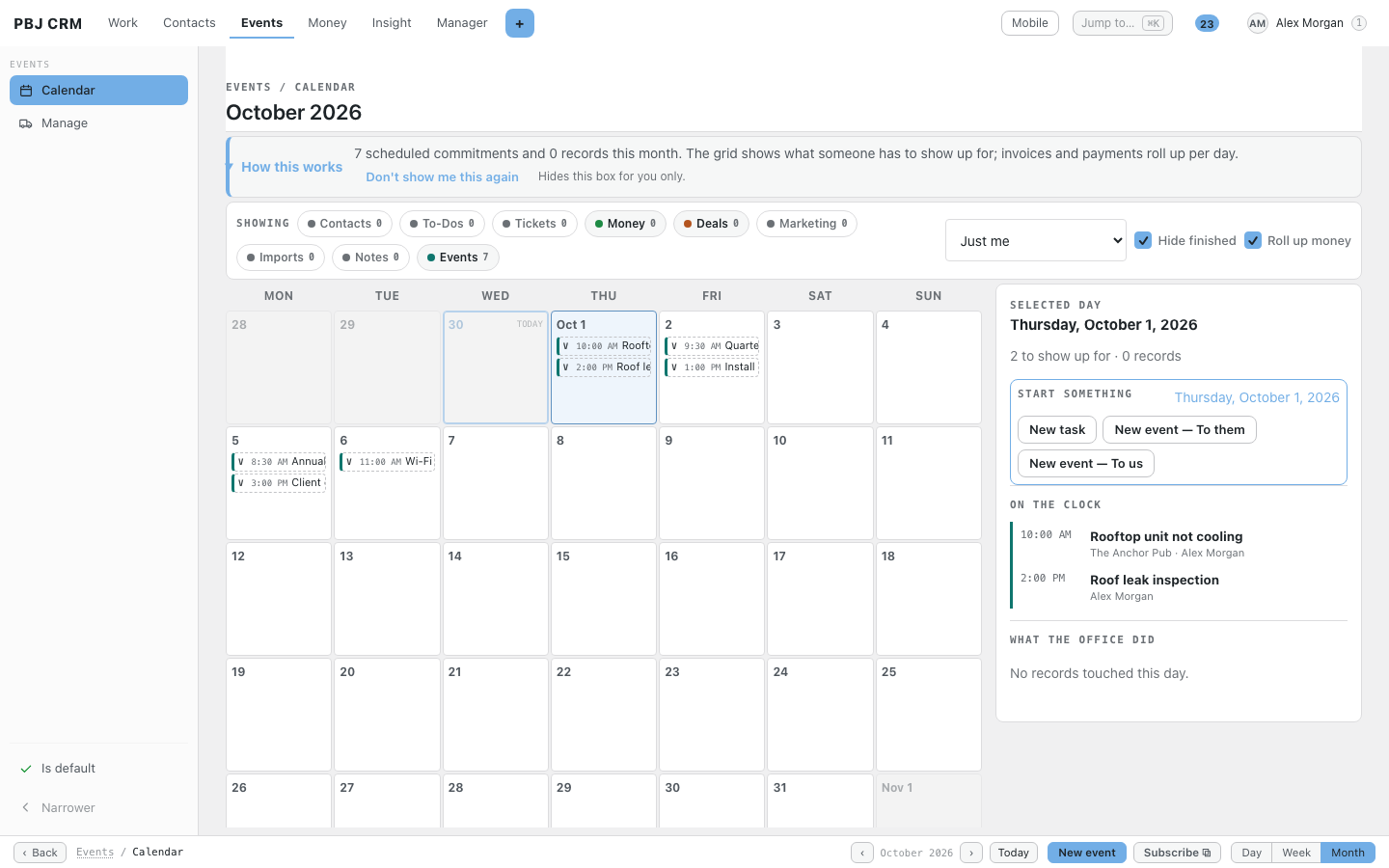
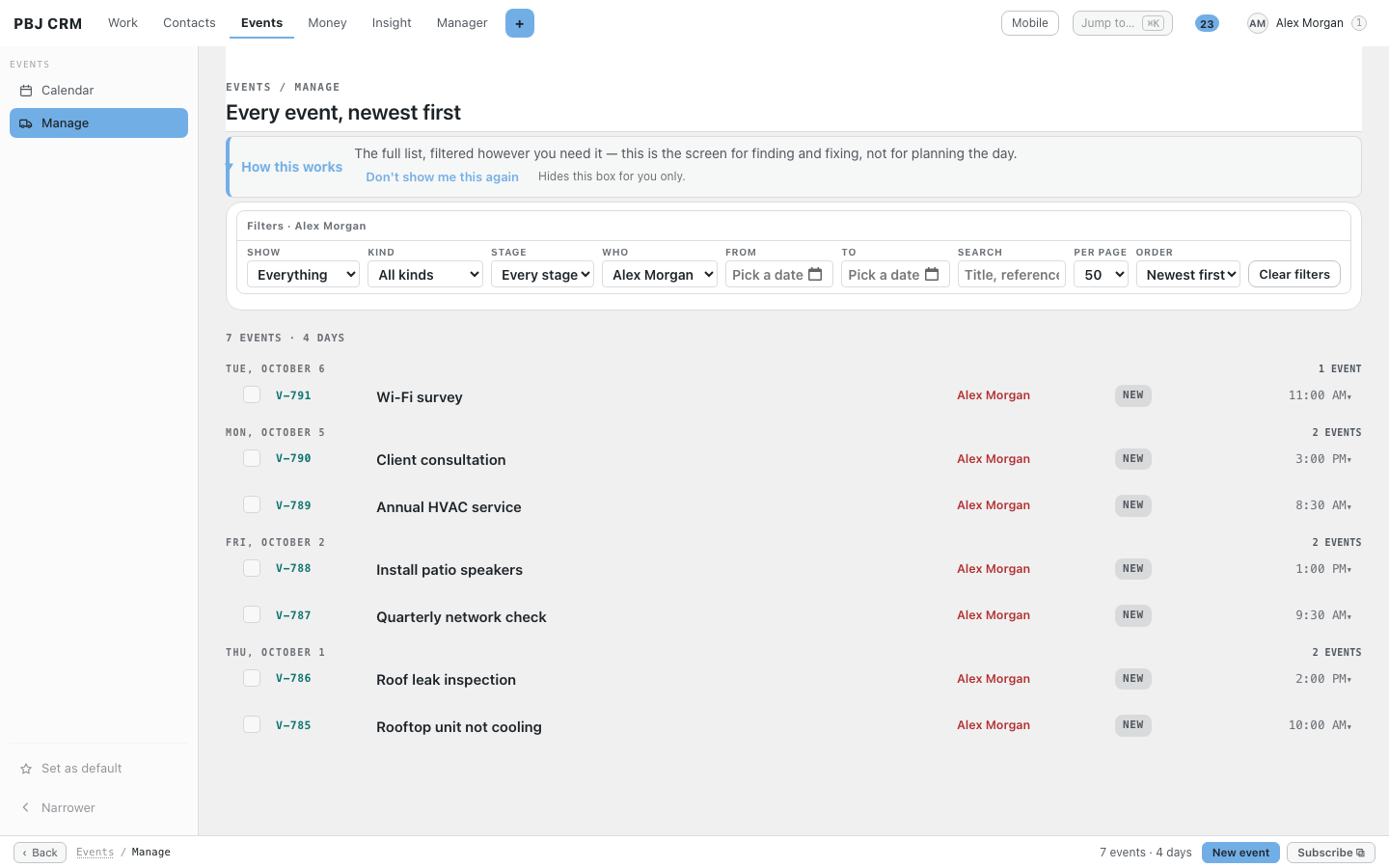
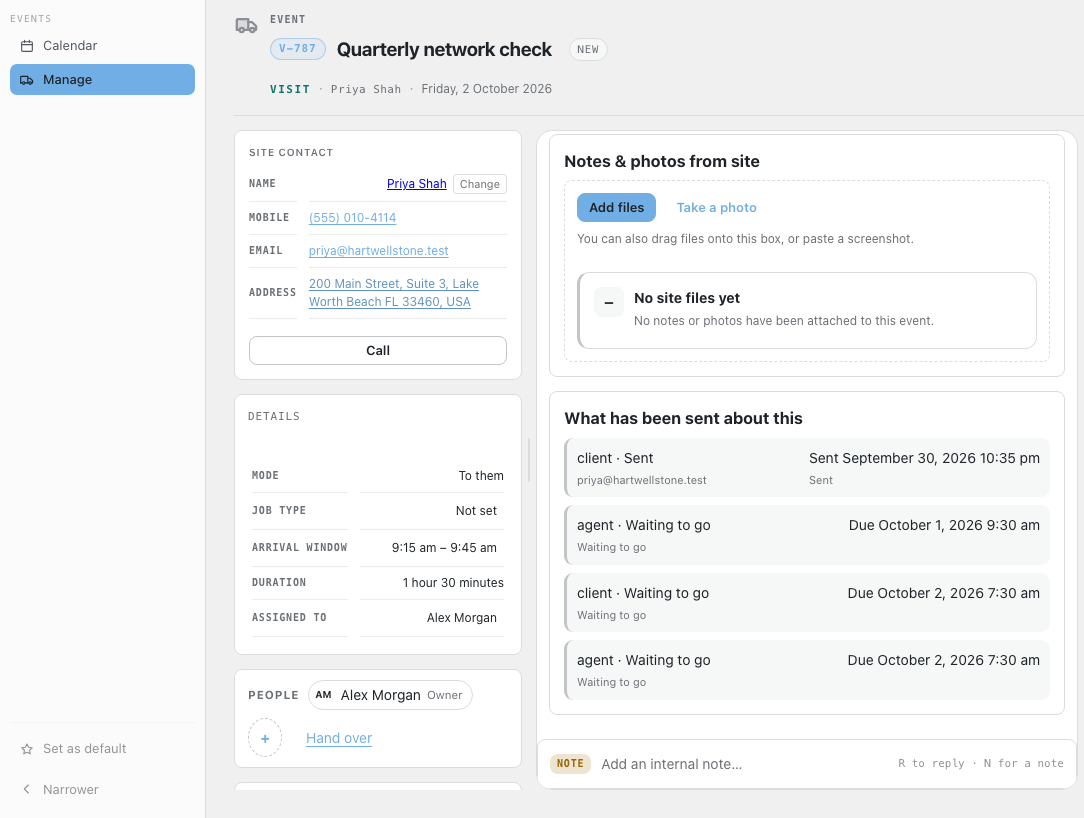
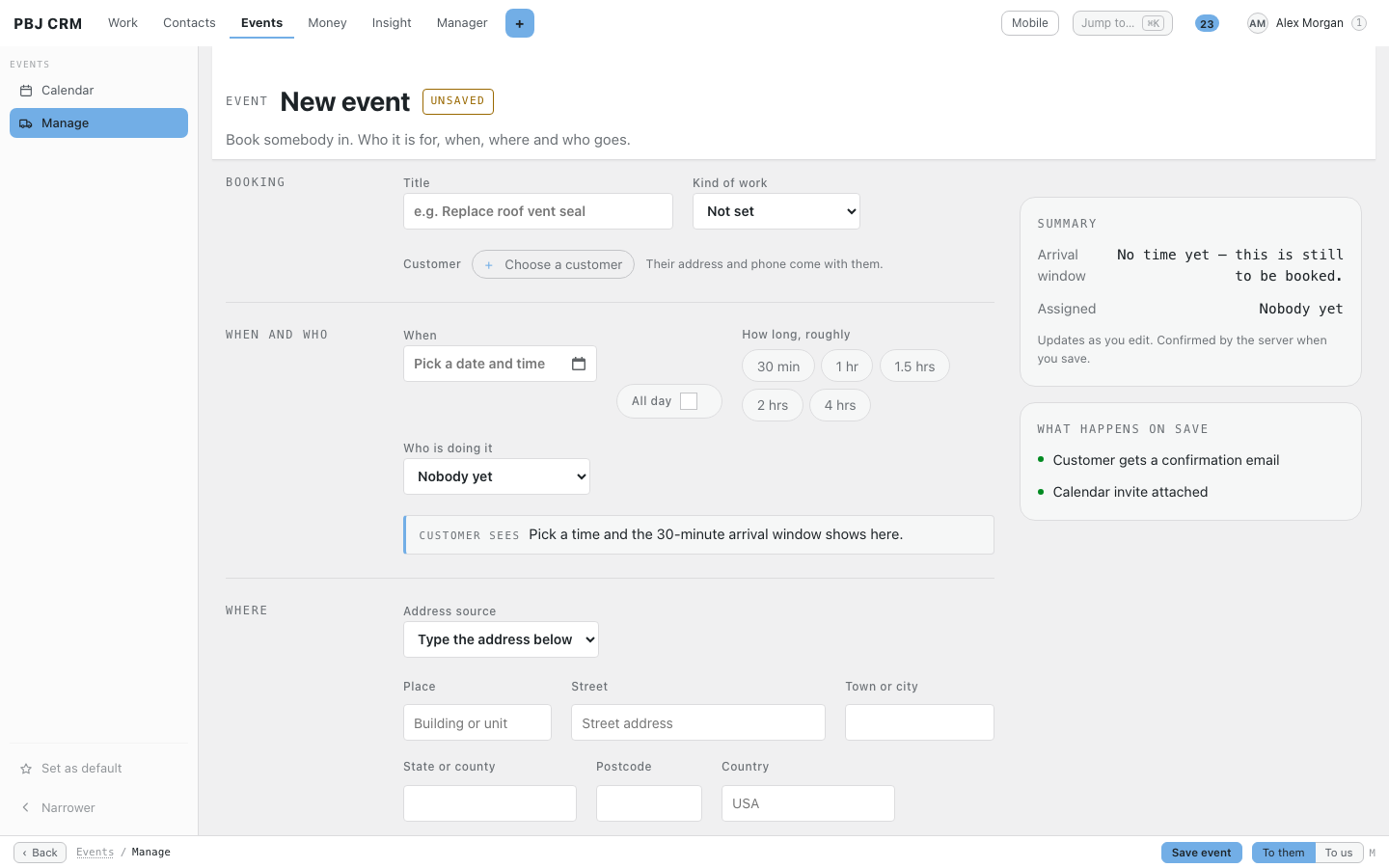
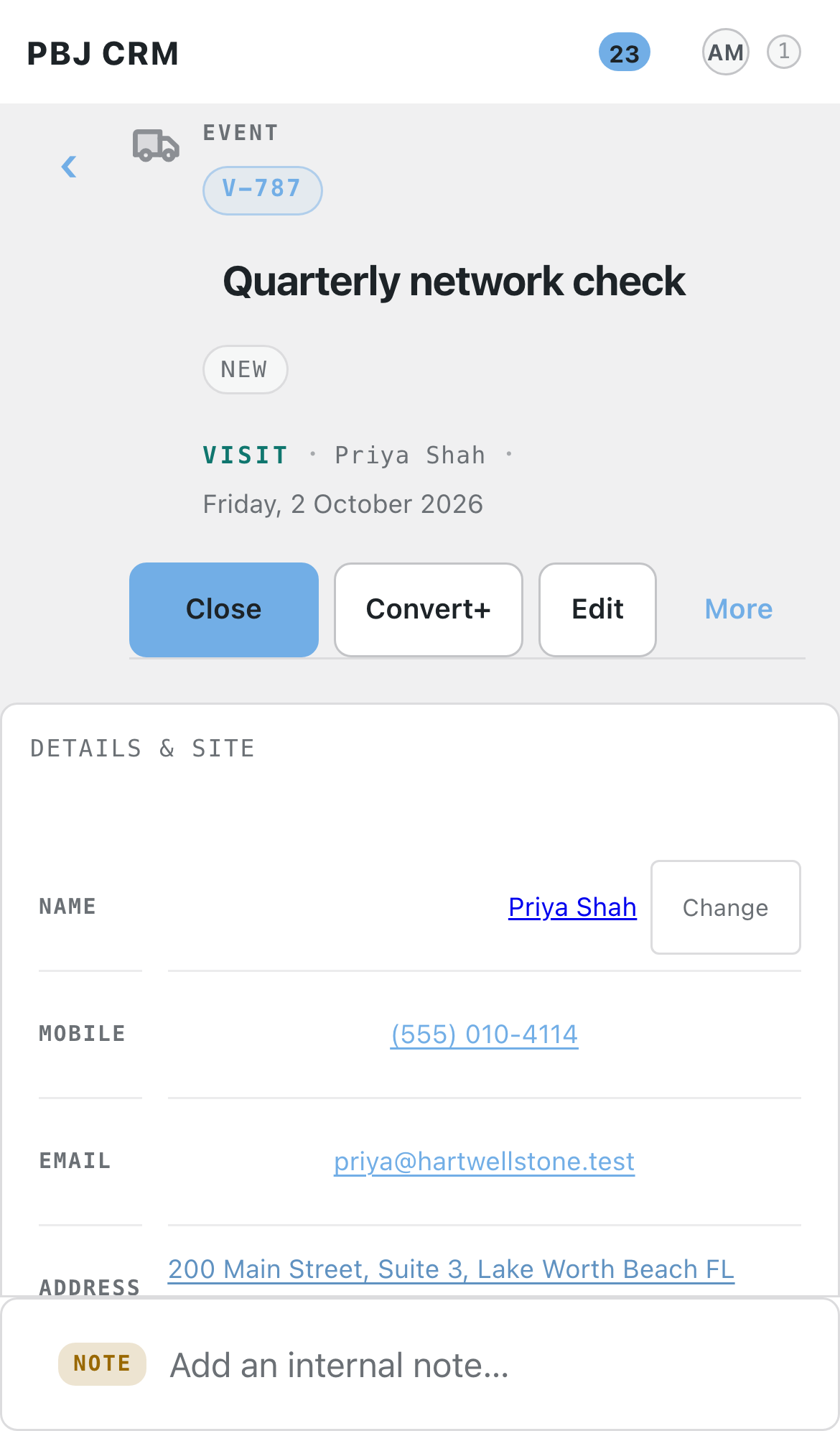
One record with a switch. A visit is when you go to them. An appointment is when they come to you. Everything else about the two is identical, so there is one form, one list, one detail screen and one number to quote down the phone. No second system for shop jobs that everybody forgets to update.
One run of numbers across both kinds. V-1, V-2, V-3. Not DSP-1 alongside APT-1. Nobody has to know which kind a booking is before they can look the number up — which matters the moment somebody rings and says “I am calling about V-14.”
You book a time; everybody is told a window. Set how wide the window is once — thirty minutes to start with — and every screen and every email says that window, centred on the time you picked. Book two o’clock and the customer is told quarter to two until quarter past. Set the width to zero and everybody is told the exact time instead. One number, set once, and nobody is ever told “sometime Tuesday.”
Where, written down at the time. The address is copied onto the booking when you make it, not looked up later. Somebody correcting a customer’s postcode on Tuesday afternoon does not silently move Monday’s job. Gate codes, “park on the verge”, “round the back through the yard” — all of it sits on the job, where the person driving there will read it.
Stages in your words. New, Booked in, On the way, On site, Done, Cancelled out of the box — and rename every one of them to whatever your team actually says. What a stage means is set separately from what it is called, so you can call the finished one “Signed off” and the lists and counts still know the job happened.
Kinds of work that route themselves. Optional, and a one-van business never needs to touch it. Name the kinds of work you do — service call, quote, install, warranty — and each one can go straight to the right team and follow its own set of stages.
A screen for 7:40 in the morning. The portal section opens on Today: your jobs, in time order, with the window, the customer, the address and one tap to move a job to “On the way” or “On site”. Then Next 14 days, To be booked for work with no time on it yet, and Nobody on it for work waiting for a person. It is a web page, so it works on the phone in the van without anybody installing anything.
Pick up the next job without phoning the office. An unassigned job sitting in your team has an “I will do it” button. Managers hand work out; anybody can claim work nobody has taken.
Notes the customer can see half of. Every job has a timeline. Notes are internal by default or marked so the customer can read them, and the timeline records every stage change, every hand-over and every time the booking moved, with who and when.
Who sees what comes from the CRM. No second staff list and no second set of roles. Employees see their own work and their team’s. Managers see the teams they run. Owners see everything. The customer, signed into the portal, sees their own booking and nothing else — never who is coming, never the internal notes. Enforced in the database query, not by hiding buttons.
A tab on the customer’s own record. Open a person or a business in the CRM and their visits and appointments are right there, past and upcoming. Settings live on their own screen inside the CRM — there is no extra menu item to hunt for.