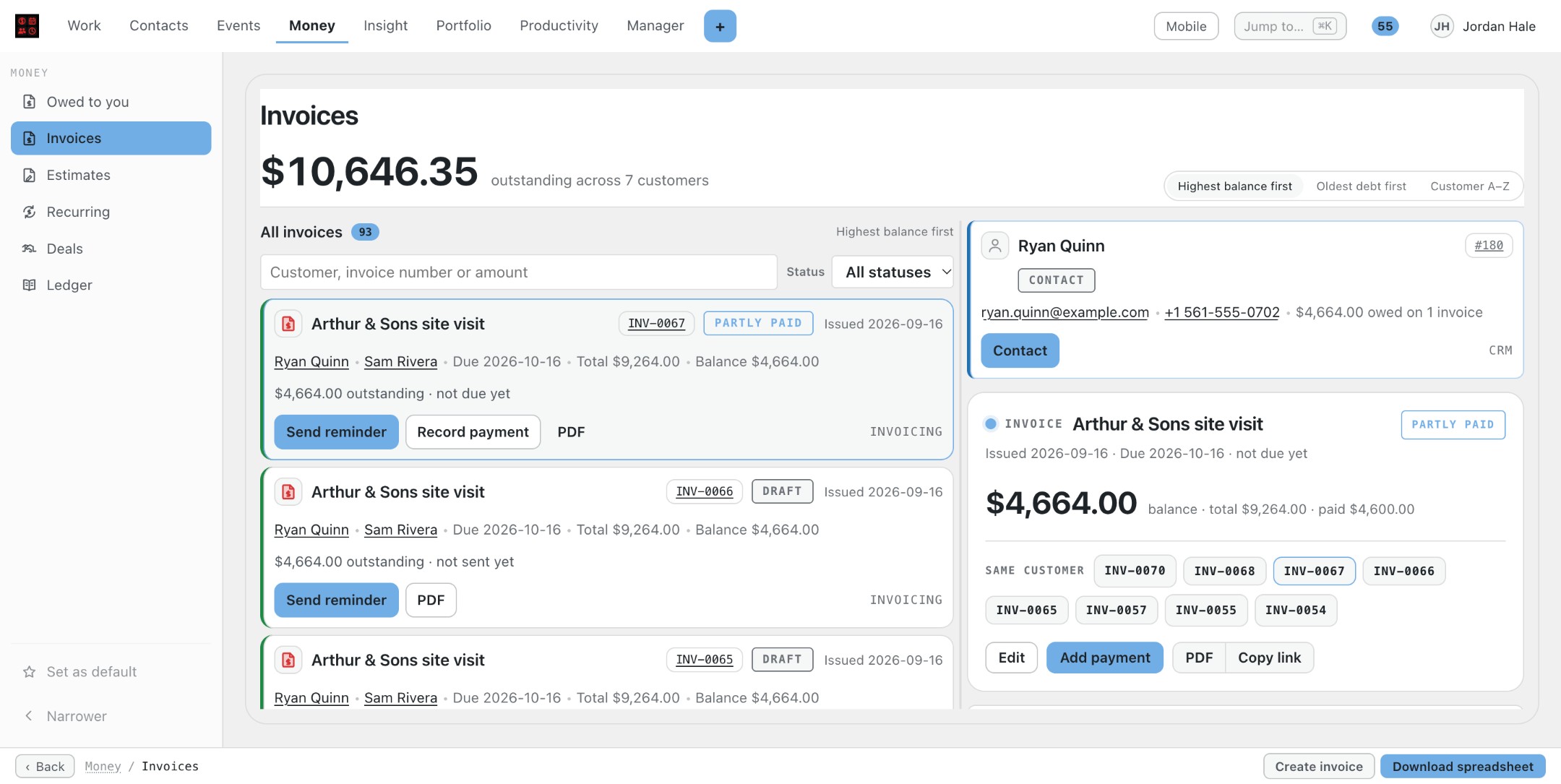
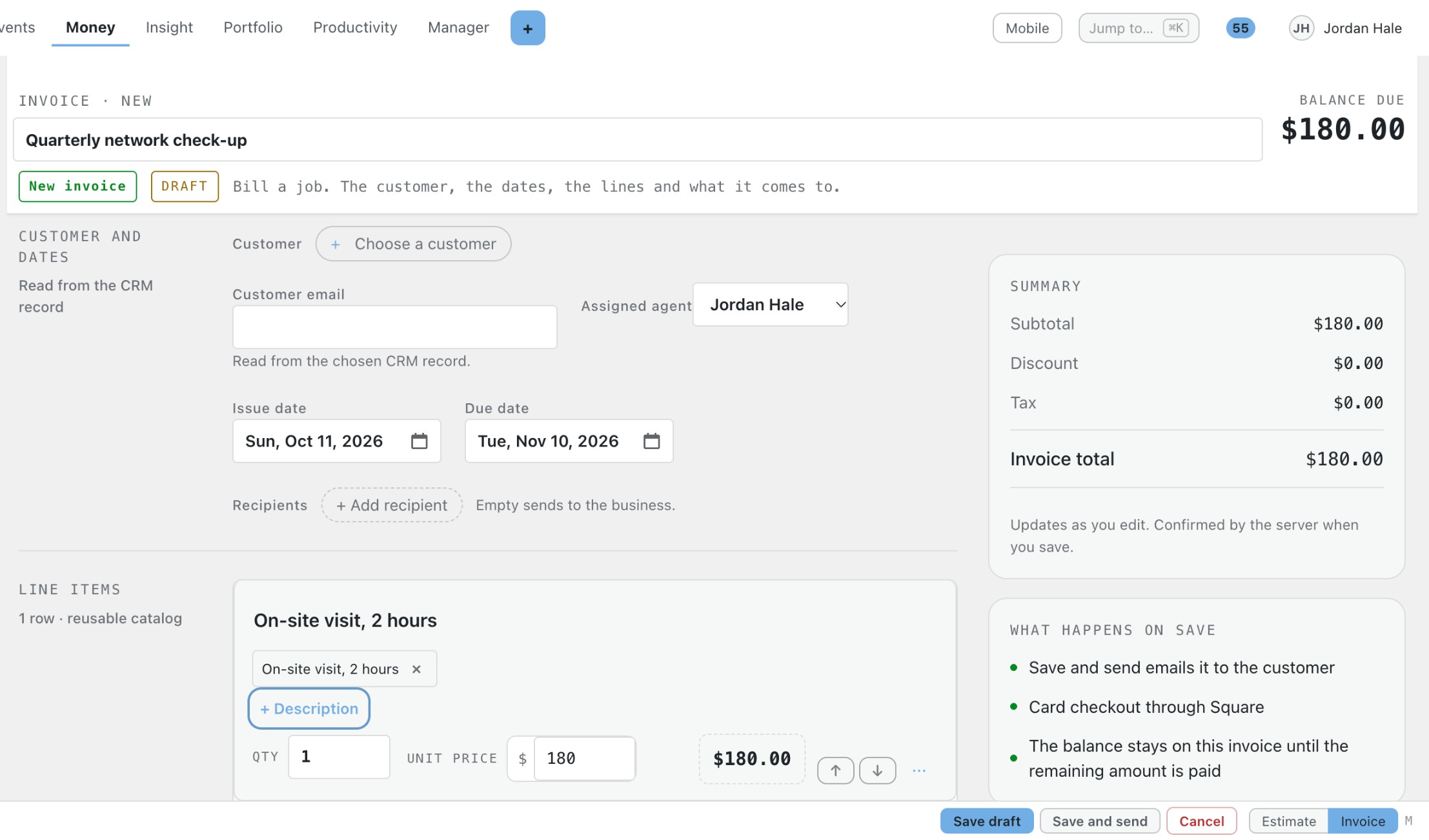
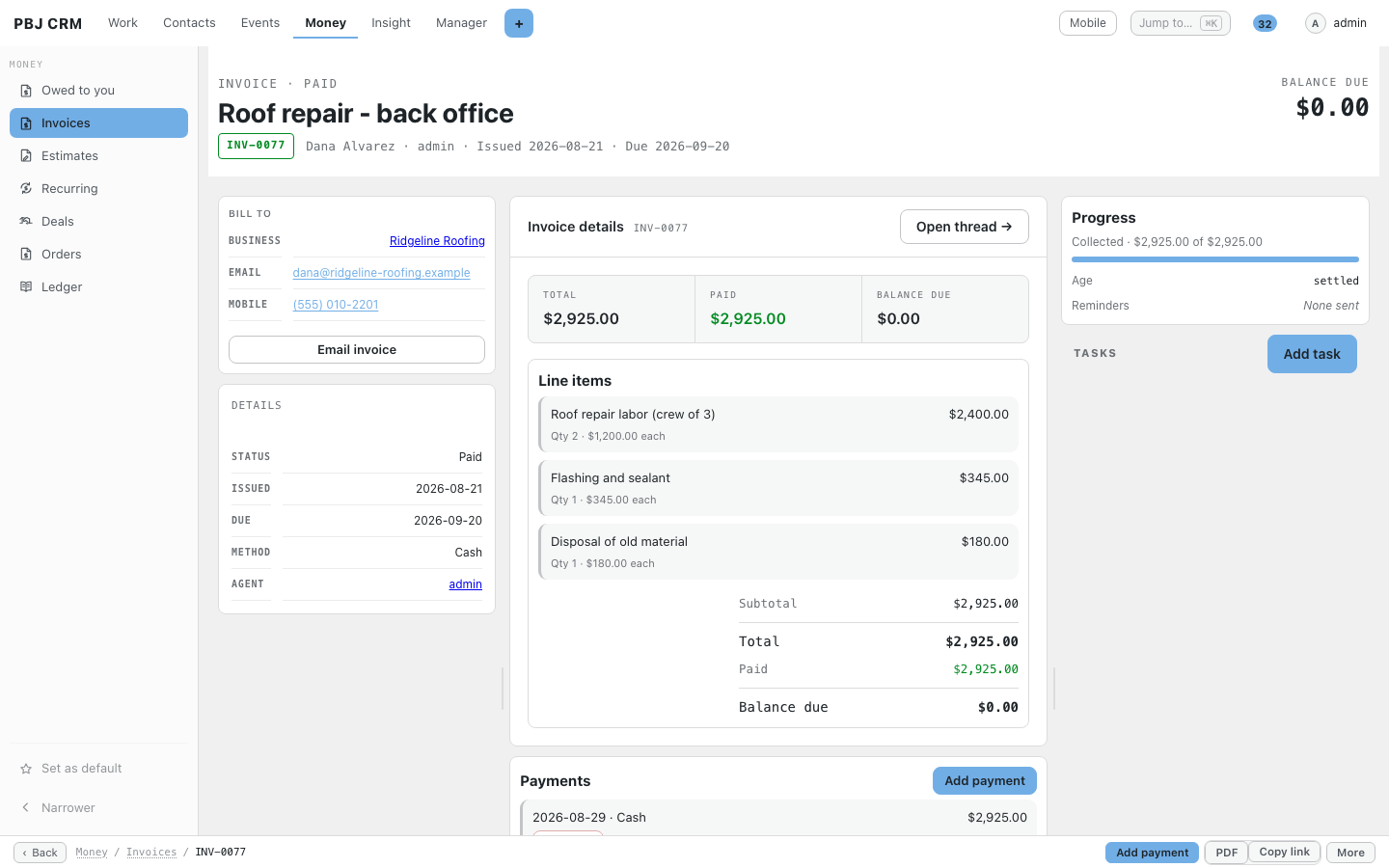
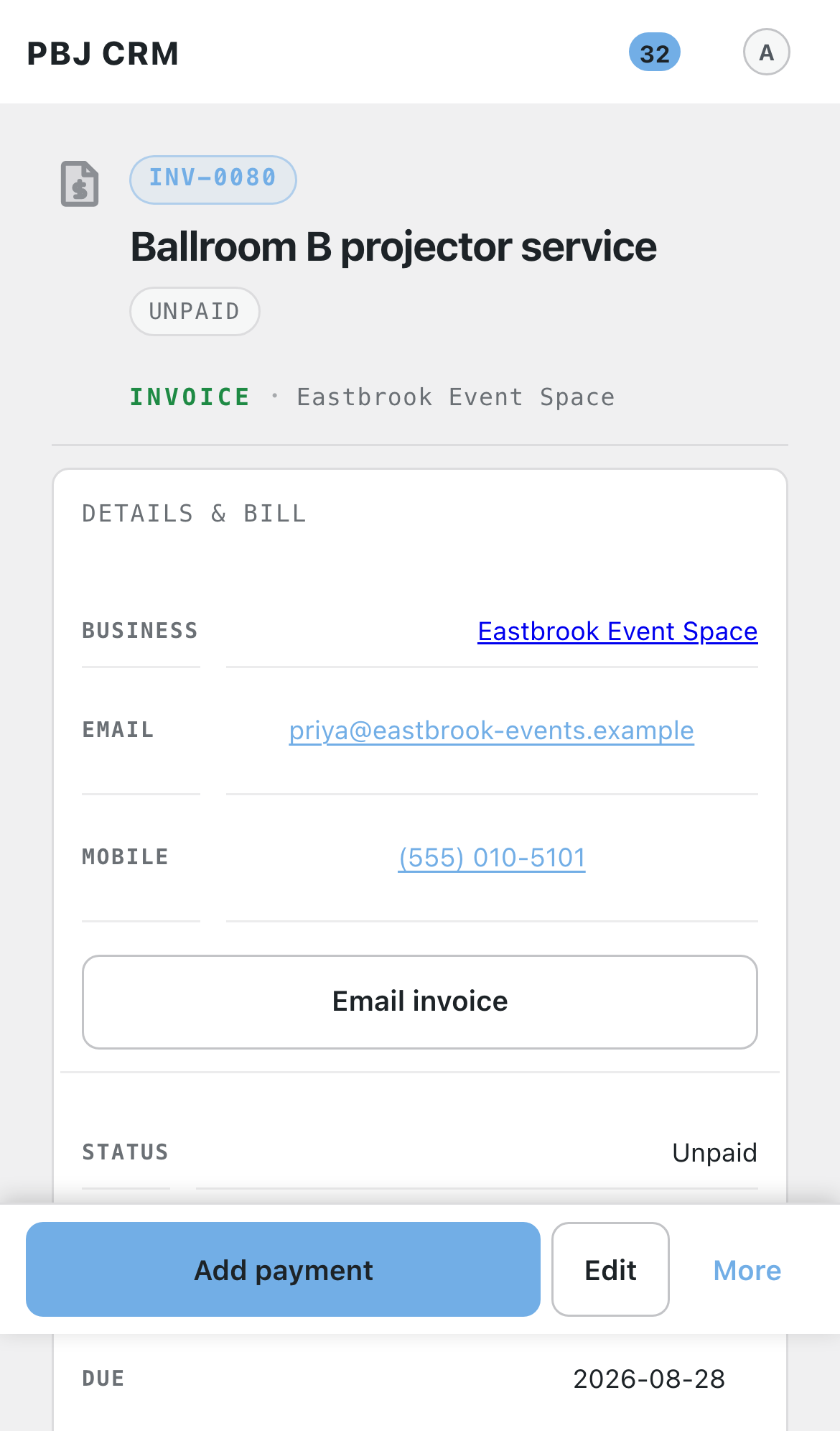
One customer list, not two. Every invoice and estimate is for a person or a business already in your PBJ CRM. No re-typing, no export, no sync that silently stops working.
An invoice for a business AND a named person at it. Choose the business, then who at the business it is for — the document reads "Jane at Acme" while still belonging to Acme.
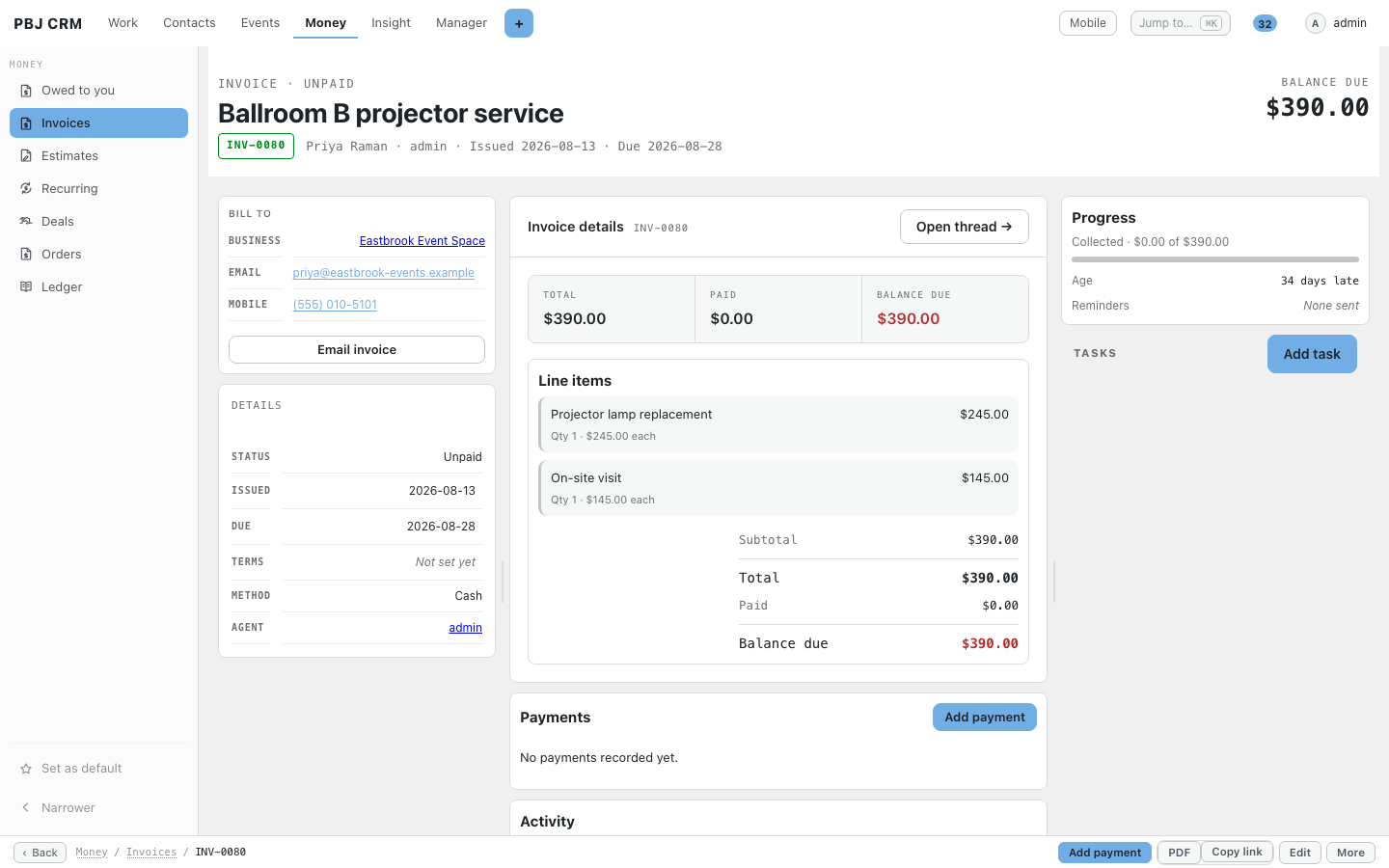
A real page for your customer. Every invoice gets its own address on your site with a long random token — no login needed, nothing else reachable from it. It carries the invoice, a PDF to download or print, a PAID stamp when paid, your notes, your terms and a Pay button.
Card payments without a plugin stack. Square, PayPal and Stripe hosted checkout with signed webhooks — the payment lands even if your customer closes the tab, and a receipt goes out automatically. Cheque, bank transfer and cash go on as manual methods you define.
Your payment accounts are asked for once. They live in PBJ CRM under Connected accounts, encrypted; invoicing reads them from there. No pasting one token into two screens.
Estimates that become invoices. Send an estimate, your customer accepts or declines on their page, and acceptance turns it into the real invoice.
Money handled as money. Line items, discounts, tax, deposits and part-payments, all in whole cents — no floating-point rounding surprises, ever.
Saved line items. Save the lines you use often and add them to any invoice, estimate or recurring template with one pick — each added line stays fully editable.
Chasing, without you. Reminders on the schedule you choose, late fees (flat or percent, with grace days and a cap), and recurring profiles that turn a template into a real invoice on schedule — all on a daily tick, with a "Run the daily jobs now" button and a warning if your site’s cron ever stops.
"Money owed to you." One screen that says who owes you, how much, and how late — not due yet, 1–30, 31–60, 61–90, more than 90 days — with CSV export.
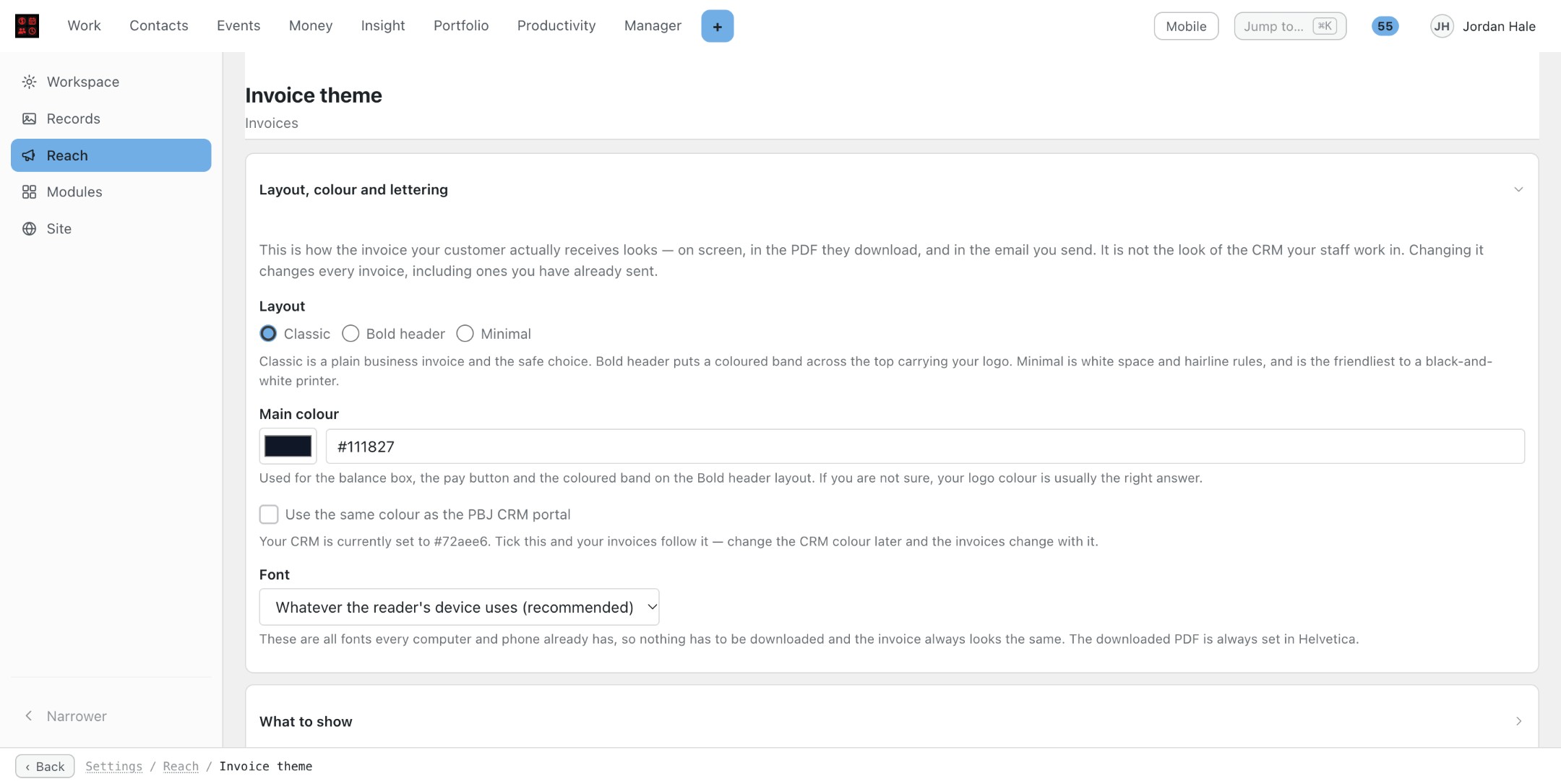
Three invoice themes (Classic, Bold header, Minimal) plus your color, font, logo and footer — applied identically to the web page, the PDF and the emailed copy.
A log for every document. Sent, viewed, paid, refunded — mirrored onto the customer’s CRM timeline so the whole story is on one page.